When the Road Became Part of the Holiday
When the road became part of the holiday, travel gained room for pauses, local encounters and changing scenery; learn which pace suits your journey.
On a railway journey through the Highlands, the view can shift from a station platform to open moorland, then narrow into a wooded glen. The track still carries you towards a destination, but the landscape between stations can become part of the day. When the road became part of the holiday, this kind of attention changed how some travellers understood a journey.
That change was neither sudden nor universal. People had long travelled for practical reasons, and they had also admired landscapes along the way. What developed over time was a more visible idea: travel could be valued not only for reaching a place, but for the experience of passing through others.
How did the journey gain a place in leisure travel?
For much of history, journeys were shaped by the means available and the need to reach a destination. Roads, ferries, stagecoaches and railways served everyday purposes as well as leisure. Their routes followed practical constraints such as terrain, crossings, stops and connections; a traveller might notice the surroundings, but getting through remained the central task.
With the growth of organised leisure travel in the nineteenth century, railways made particular landscapes and resorts more accessible to some travellers. The railway excursion, for example, linked a planned outing with a set route and timetable. Later, touring by motor car gave travellers another way to choose roads and pause along them, though access to vehicles and free time was uneven. These developments did not replace practical travel or invent landscape appreciation. They made some forms of pleasure travel more explicit and varied.
The distinction matters because transport history is not a simple march from hardship to freedom. A railway could be a means of work or migration, as well as a holiday conveyance; the same road could carry local traffic and visitors. The route’s meaning depended on who was travelling, why, and what choices were available.
What did the route itself add to a holiday?
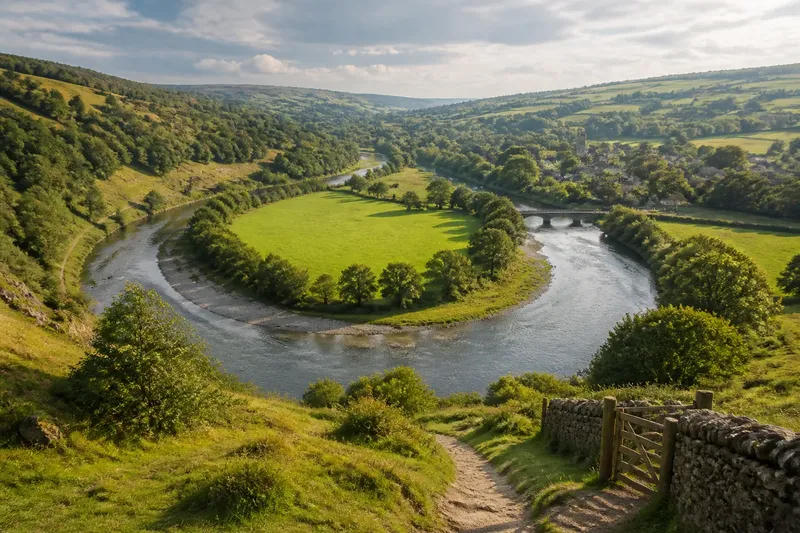
A journey treated as part of a holiday asks the traveller to notice transitions: a river crossing, a change in building materials, or the way farms give way to woodland. The interest lies less in ticking off landmarks than in seeing how a place connects to its surroundings.
Transport can make those transitions visible in different ways. A train offers a moving view shaped by the railway’s course and station stops. A ferry makes the crossing itself unavoidable, with shorelines seen from the water. A road may allow pauses at villages or viewpoints, where access and local rules permit. None is automatically more rewarding; each gives a different view of the relationship between route and landscape.
Think of a journey as a thread sewn through a piece of cloth: the thread’s direction matters, but so does the pattern it passes through. This is not a reason to make every trip leisurely. It is a way to understand why a route can stay in memory even when the destination remains the main purpose.
How do rail, road and ferry journeys shape what you notice?
Rail travel often reveals landscape in sequence. Stations mark pauses, and the railway line may pass through cuttings, tunnels or elevated sections that frame the view. Because stops are fixed, the traveller usually observes from the train rather than wandering into a settlement.
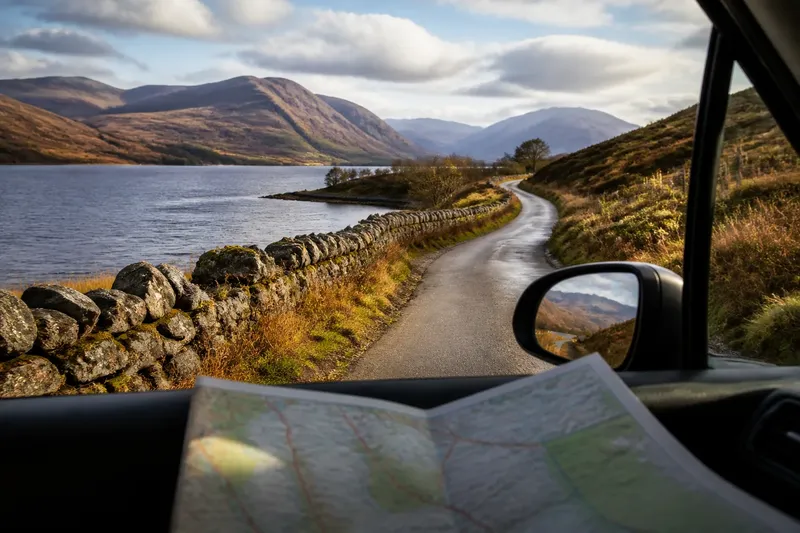
Road travel can offer greater freedom to stop, but that freedom depends on safe places to pull over, access rights and the conditions of the route. A marked viewpoint or public car park is different from stopping on a narrow lane. Drivers must keep attention on the road, so passengers are better placed to watch the scenery and map its changes.
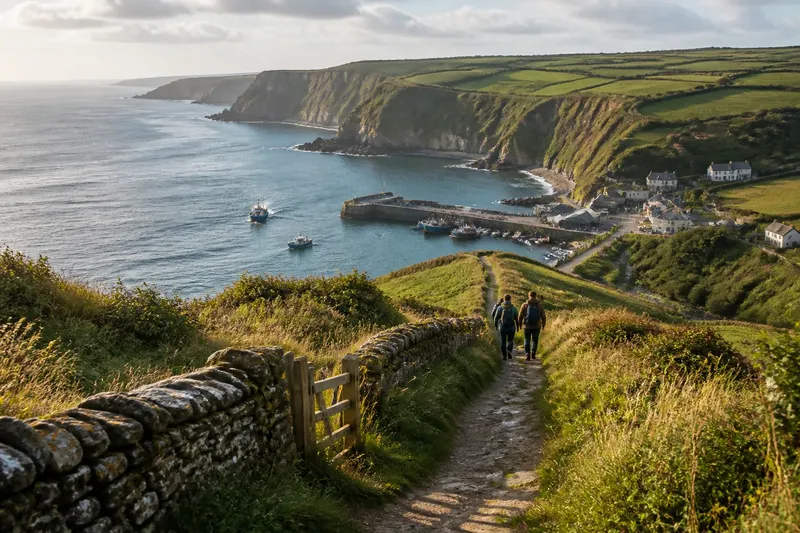
On a ferry, the crossing makes water a central feature rather than a boundary to be passed quickly. The shore may appear as a line of fields, cliffs, buildings or harbour structures. The view changes with the vessel’s course, and the timetable still shapes how long the traveller can look.
Each mode carries practical limits. Weather, service disruptions, accessibility and local transport links can affect what is possible. Checking current operator information and local access guidance is part of reading the route responsibly, not an interruption to its pleasures.
What questions help explain the history of scenic travel?
Did railway excursions make scenery a reason to travel?
They helped make planned leisure outings by rail more visible, especially where services connected cities with resorts or countryside destinations. They were part of a longer history of people appreciating landscapes while travelling, not its starting point.
Did motor cars make every countryside route accessible?
No. Car travel offered some travellers more control over where to stop, but access depended on having a vehicle, suitable roads and permission to use particular places. Rural transport and road conditions also varied.
How can a journey be scenic without being a sightseeing tour?
Follow one feature, such as the course of a river or the changing edge of a settlement, rather than planning a stop at every attraction. A simple thread of attention can make the route legible while leaving the day’s main purpose intact.
Why does the same route feel different to different travellers?
A commuter, a local resident and a holidaymaker may use the same line or road for very different reasons. Their time, familiarity, obligations and ability to pause shape what they notice and what the journey means to them.
How can you choose a route that suits the day?
Start with the purpose of the trip, then check what the route permits. A fixed appointment may call for a direct service; a flexible holiday day may allow a longer crossing or a planned stop. Consider energy, companions, connections, accessibility and the conditions of any place where you might pause.
- Arrival time: If you must reach a booking or connection at a fixed time, choose a service with a manageable itinerary; otherwise, consider a route with more room for observation.
- Connection changes: If the route requires a transfer that would be difficult for your party, choose a simpler connection; if the change is straightforward and the extra passage appeals, keep it in consideration.
- View from the route: If the landscape is a reason for the outing and the route offers a clear way to see it, choose that route; if the view is incidental, prioritise a convenient arrival.
- Safe places to pause: If there is a recognised stopping place with suitable access, plan a brief visit; if not, stay on the route rather than stopping somewhere unsuitable.
- Energy and mobility: If the journey’s transfers or walking demands exceed what your group can manage comfortably, choose a less demanding option; otherwise, consider whether a short walk adds something you value.
- Local services: If a planned stop has an onward bus or open facility that suits your timing, include it; if the service is unavailable or unclear, choose a different stop or continue to the destination.
Say you and a friend have a free day to reach a fictional village called Bracken Fold by rail. For this invented situation, assume the direct train takes you there without a change, while a second route makes a longer connection at fictional Moorbank station and has a public path to a nearby field edge. You check the current timetable, confirm that the path is open and accessible for your party, and see that the longer route still leaves time to reach your lodging before dark. You decide that the direct train is better if arriving rested is the priority; if the landscape and short walk are the point of the day, the Moorbank route offers that experience at the cost of a longer journey. The observable result is a clear choice based on the day’s purpose, not an assumption that the slower option is always preferable.
When the road became part of the holiday, it did not stop being a means of getting somewhere. It added another possibility: travellers could give attention to a crossing, a stretch of countryside or the edge of a settlement, when circumstances allowed. Before choosing a route, decide what you want the passage to contribute—ease, a particular view, or a chance to understand how the destination sits in its landscape.